What happens when the grapes reach the cellar?
They are cooled, then sorted. These are the two most urgent gestures, and the most decisive.
Fruit sometimes arrives warm. Heat accelerates everything: oxidation, the start of fermentation, the loss of the finest aromas. At the estate, a cold room brings the temperature of the harvest down before it enters the vat. That buys the time to work cleanly.
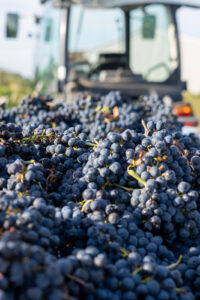
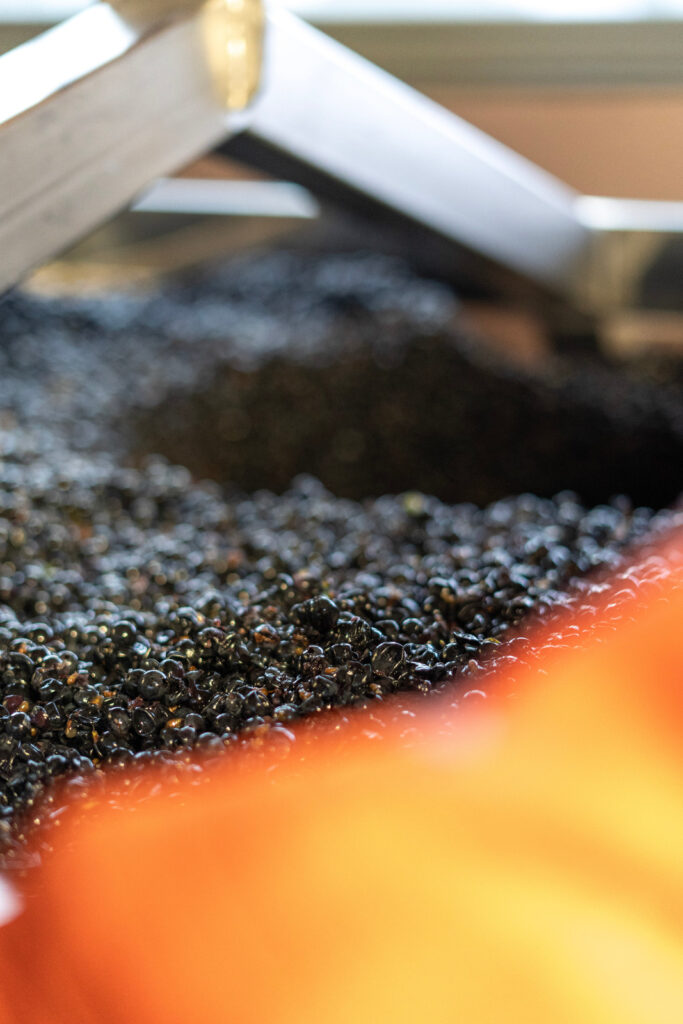
Then comes sorting. The estate uses densimetric sorting — a technique that separates berries by density, and therefore by sugar content and condition. What floats has not reached the same ripeness as what sinks.
Why does sorting matter so much?
Because nothing that goes into the vat comes back out. An unripe berry brings greenness; a damaged one brings a taste no amount of ageing will remove. Sorting is the last moment at which you can still decide what will be part of the wine.
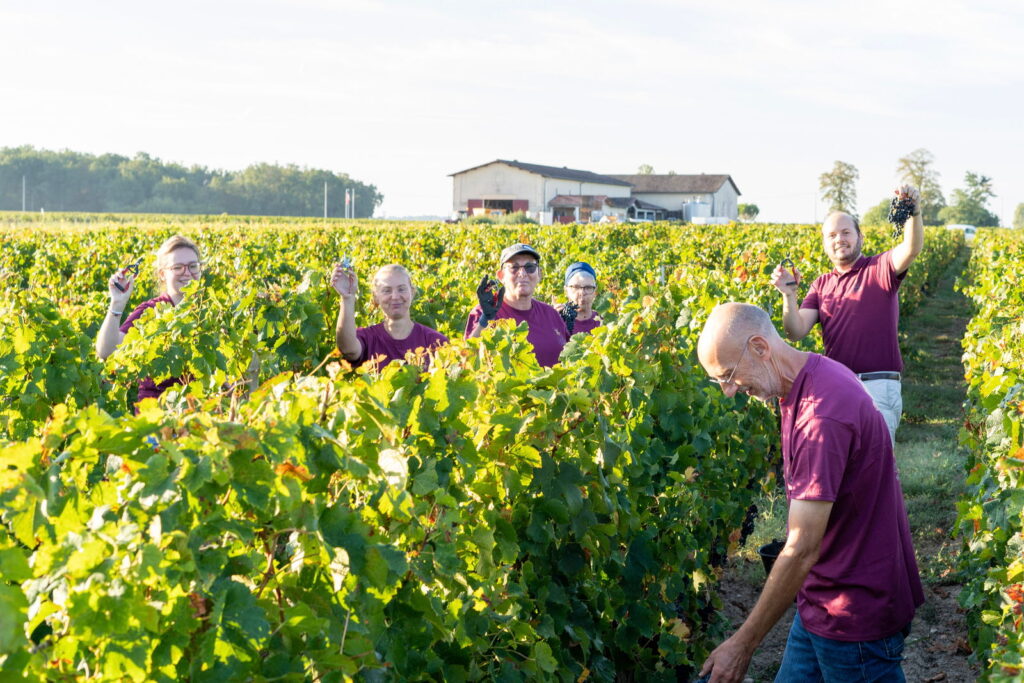
At Château La Fleur de Boüard the work starts earlier still: picking is done entirely by hand. A first sort therefore happens in the vineyard, bunch by bunch, before the fruit ever reaches the cellar — which lightens the sorting that follows.
It is also the least glamorous: long, repetitive, often nocturnal when picking starts early to catch the cool. And it is what most clearly separates quality levels within a single appellation.
What is gravity-fed winemaking?
A way of moving grapes and wine without pumping them. A pump is brutal: it crushes berries, tears skins, and drags harsh tannins out of the pips. Gravity does none of that.
The principle is simple but expensive in architecture: every stage must sit lower than the one before. Here the harvest is raised to the top of the vats by a gravity system, and wine movements are made by a lift the estate describes as the first on the Right Bank.
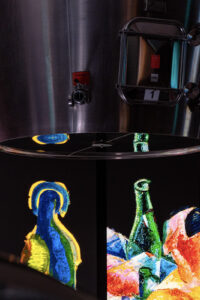
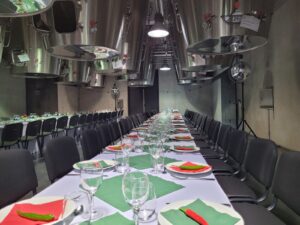
The vat room itself holds 28 inverted truncated-cone vats, which the estate describes as appearing to float in the air. The shape is not decorative: an inverted cone gives a wide contact surface between juice and cap, which changes how the wine draws colour and tannin.
Why ferment plot by plot?
To keep the choice open. Each parcel goes into its own vat and ferments separately. You end up not with one wine but with dozens, which are only blended after each has been tasted.
That is what makes a fine blend possible. Without the separation, an average parcel dilutes a remarkable one and nobody notices. With it, you can set aside, reserve and rank.
Why is the vintage decided in these three weeks?
Because everything else is already written. The year’s weather has done its work since winter pruning; the grower can no longer undo a drought or cancel a hailstorm. What remains in his hands comes down to two decisions: when to pick each parcel, and what to keep.
The picking date arbitrates between opposite risks. Picking early preserves freshness and acidity, at the risk of green tannins. Picking late brings ripeness and volume, at the risk of a heavy wine with fallen acidity. Between the two, the window is sometimes a matter of days — and it is not the same on clay as on gravel.
This is why an estate tastes berries parcel by parcel in the preceding weeks rather than relying on analysis. A sugar reading says nothing about the ripeness of the pips or the skins; the mouth does. That invisible work is what separates our wines from one vintage to the next.
What happens in the vat, day by day?
Alcoholic fermentation first: yeasts turn the grape’s sugar into alcohol. It is followed twice a day by measuring the density of the juice, which falls as the sugar disappears. That is the winemaker’s thermometer.
Then maceration: the juice stays in contact with the skins, drawing colour, tannin and much of the aroma. Its length is a choice, not a given — a few days for a fruit-driven wine, several weeks for a wine built to age.
Throughout, the juice is pumped over the cap to maintain that exchange, temperatures are controlled, and the wine is protected from oxygen. The estate uses vat inerting and a nitrogen generator for this, and keeps its cellars insulated at 14 °C (57 °F).
Why does plot-by-plot matter more on the Right Bank?
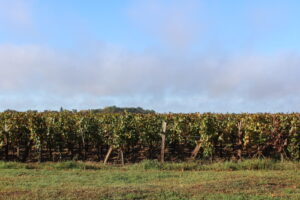
Because the soils change over very short distances here. Néac is the hillier half of Lalande-de-Pomerol, and a single estate can hold gravel, clay and sand within a few hundred metres. Two parcels facing each other across a track will not ripen on the same day, nor give the same wine.
Blending everything together would flatten exactly what makes the place interesting. Keeping the parcels apart until the final tasting is what turns a geological accident into a deliberate choice — and it is the reason our estate wines differ from one another rather than being versions of the same thing at different prices.
When does the wine leave the vat?
After running off, which separates the free-run wine from the marc, the marc is pressed — press wine, firmer in tannin, may or may not be blended in depending on the vintage.
Then comes malolactic fermentation, a second fermentation, bacterial this time, which converts a hard acid into a softer one. This is what rounds the wine out. Then down into barrel, and silence returns to the cellar for many months.
How long does all this take?
Harvest itself runs over a few weeks, following the ripeness of each parcel — the whole vineyard is never picked on one day, and that is precisely the point of working plot by plot. Fermentation in vat then takes several weeks, and ageing several months.
Which is to say: what you open in five years began with three very intense weeks, one autumn, in a building that smells of must.
In short
The fruit is cooled, sorted by density, then moved into vat without a pump, by gravity, into one of the estate’s twenty-eight inverted cone vats. Each parcel ferments separately. Density is tracked, temperature controlled, oxygen kept away. Then running off, pressing, malolactic fermentation, and down into barrel.
Your questions answered
When does harvest take place in Bordeaux?
Generally from late summer into autumn, but the exact date depends on the year’s weather and varies from parcel to parcel. No two vintages are alike.
Why do some estates pick at night?
To bring in cool fruit. A cold harvest oxidises less and gives the cellar time to sort it before fermentation starts on its own.
What does gravity-fed winemaking actually achieve?
It avoids pumping grapes and wine. Less crushing means finer tannins and less bitterness extracted from the pips.
What is malolactic fermentation?
A second, bacterial fermentation that converts malic acid — the acid of a green apple — into lactic acid, which is softer. It rounds the wine out.
Can you visit a cellar during harvest?
It is when a cellar is most alive, and also when the team is busiest. It is worth checking availability when booking.