What exactly is crasse de fer?
A hard, iron-rich layer sitting beneath the surface soils. It is made of compacted clay and sand cemented by iron oxides, and its colour runs from blue-grey to clear rust.
A note on geography first. The Libournais is the part of Bordeaux’s Right Bank around the town of Libourne, taking in Saint-Émilion, Pomerol and Lalande-de-Pomerol. Château La Fleur de Boüard sits at Néac, in Lalande-de-Pomerol.
The layer’s first characteristic is mechanical rather than chemical: it is almost impermeable. Water that filters through the surface gravel stops there instead of continuing down.
Its second characteristic is how irregular it is. Thickness, depth and concentration vary sharply from plot to plot, sometimes within a few dozen metres. That is exactly what makes it interesting — and what rules out any general law.
Where is it found on the Right Bank?
In the Pomerol and Néac sector, in bands, and never everywhere. The Lalande-de-Pomerol appellation covers around 1,100 hectares (about 2,700 acres) across two communes, Lalande-de-Pomerol and Néac, immediately north of Pomerol.
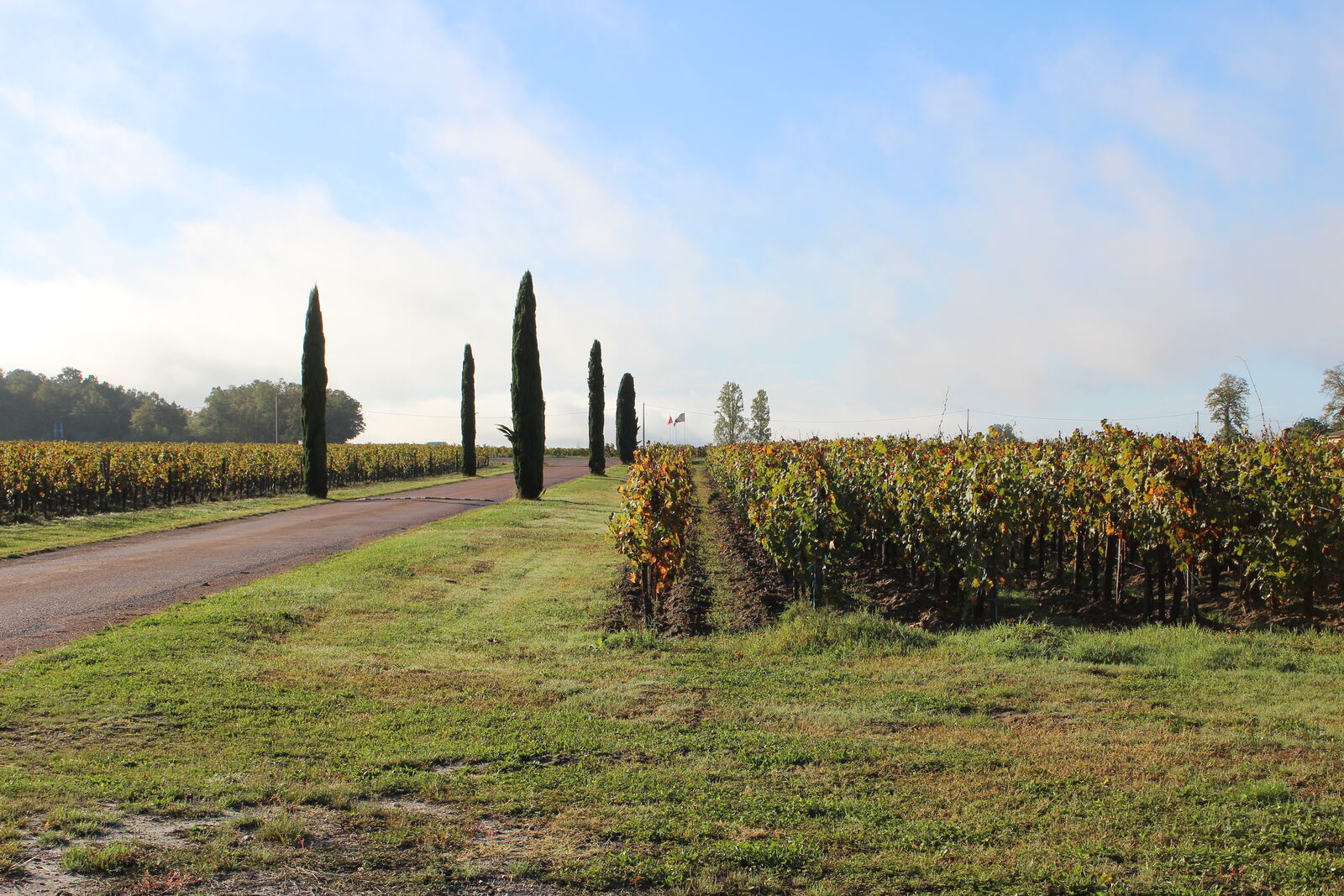
What separates the two appellations is slight: a small stream called the Barbanne. At Néac, the Chevrol plateau continues the Pomerol plateau at the same altitude, around 35 to 40 metres, on soils mixing clay and fine gravel. And a band either side of the main road carries stony gravel and clay marked with traces of iron oxide — that is the crasse de fer.
Head west and the soils turn sandier. Appellations are not uniform blocks: they are mosaics, and the administrative boundary never quite matches the geological one.
Why does an impermeable subsoil change the wine?
Because it decides what the vine drinks, and when. This is the soundest mechanism in the whole story, and the least glamorous.
An impermeable layer holds water above it and forms a reserve. Through a dry summer the vine draws on it instead of suffering; through a wet autumn that same layer slows drainage. The subsoil does not supply a flavour: it regulates a water supply, and it is the steadiness of that supply that reappears as steadiness in the wine.
It also limits the vine’s vigour. A less vigorous vine makes less foliage, concentrates its fruit and ripens more evenly. The link to the glass is real, but it runs through the plant — never straight from mineral to palate.
Does it really give truffle and violet?
That is what people say, and it is exactly what needs saying carefully. Many growers and commentators hold that crasse de fer gives the wines of Pomerol much of their character, and several attribute the truffle and violet notes often found there to this iron-tinted sand.
But no analysis allows anyone to claim that an iron oxide buried a metre down produces a specific aroma compound in a bottle. What can be demonstrated is the indirect chain: a subsoil, a water regime, a level of vigour, a ripening pattern, a wine profile.
In other words, crasse de fer genuinely matters — just not in the romantic way it is credited with. That nuance is easier to grasp standing in a plot than reading a technical sheet, which is what our terroirs are about.
What separates Néac from Pomerol, then?
Less than you would think below ground, more above it. The grape varieties are the same: Merlot dominant, Cabernet Franc, Cabernet Sauvignon and sometimes a little Côt. The plateau is the same, at the same altitude. Crasse de fer occurs on both sides.
The differences lie in soil proportions and relief. Lalande-de-Pomerol is gravellier overall; Néac holds a higher share of clay and more pronounced relief. And above all, the two names do not carry the same weight on the market — a commercial fact, not a geological one.
What does the estate say about its own subsoil?
Gravel and clay, without claiming crasse de fer. The precision matters: an estate can sit in a sector where the layer is documented without it being present, or decisive, on every one of its plots.
That is also why the fruit is vinified plot by plot. When soils change every hundred metres, blending the grapes before knowing them means averaging out what the ground took the trouble to distinguish.
An estate that tells you exactly what lies under its feet, without embellishment, tells you more than one waving a geological buzzword.
How does it read in the glass?
Through consistency rather than through an aroma. This is the honest test, and it takes two bottles rather than one.
Taste the same wine across two vintages with opposite weather — one dry year, one wet. On a terroir with a well-regulated water supply the gap between them stays contained: structure and balance resemble each other, the style holds. On a very free-draining soil the gap widens.
That constancy, far more than a truffle note, is the signature of a good subsoil. It also shows over time, which is what gives the sector its reputation for ageing: La Fleur de Boüard belongs to that logic of a wine built to hold.
Can you see it on a visit?
Rarely intact, but you can see its effects. Crasse de fer is buried: short of an open soil pit or a freshly cut bank, you will not observe it directly.
Late autumn and winter are the best moments to read a vineyard, because fallen leaves leave the ground visible. You can then watch the colour change from plot to plot, pale gravel giving way to darker clay, and the relief draw itself.
A tour that takes you through the plots — and not only through the cellar — makes that reading far more concrete.
In short
Crasse de fer is an iron-rich, impermeable crust occurring in bands across the Pomerol and Néac sector. Its demonstrable effect is hydraulic: it holds water, limits vigour, steadies ripening. Its aromatic effect is a widely shared hypothesis, not a proven fact.
What it really records is a kinship of ground between two appellations that the Barbanne separates on the map and geology separates far less.
Frequently asked questions
What is crasse de fer?
A hard, almost impermeable subsoil layer of compacted clay and sand cemented by iron oxides. Its colour runs from blue-grey to rust.
How deep is it?
It varies sharply from plot to plot, as do its thickness and concentration. There is no standard depth.
Does it really give truffle aromas?
It is a widely shared belief on the Right Bank, but it is not demonstrated. The established effect of the layer is hydraulic: it regulates the vine’s water supply.
Is crasse de fer found at Néac?
Traces of iron oxide are documented in the sector, notably on a band mixing stony gravel and clay. Its exact presence varies from plot to plot.
What is the soil difference between Pomerol and Lalande-de-Pomerol?
Both appellations share the same type of plateau, at the same altitude, and the same palette of soils. Lalande-de-Pomerol is gravellier overall, Néac more clay-rich.
How large is the Lalande-de-Pomerol appellation?
Around 1,100 hectares, spread across the communes of Lalande-de-Pomerol and Néac.