How does a family gathering differ from a wedding?
In length, in the spread of ages, and in the fact that nobody is dressing up for a ceremony. Three differences that change everything about the planning.
A wedding fills a whole day and often the night. A birthday or a christening runs four to six hours: drinks, a meal, some free time, a departure. The venue therefore has to be pleasant at lunchtime, not only at dusk.
The spread of ages is the real subject. There will be people who walk with difficulty, children who cannot sit still, and adults who do not drink. A venue that only works for the thirty-five to sixty bracket does not work.
Decorative expectations are lower, but comfort expectations are higher. Nobody forgives a noisy room when the point was to talk to each other.
Which space suits which table?
The volume of the room should match the number of guests, not exceed it. This is the classic mistake with family gatherings: booking too big because it looks better.
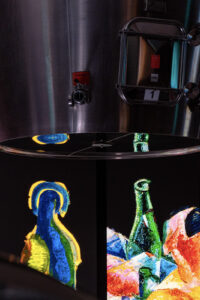
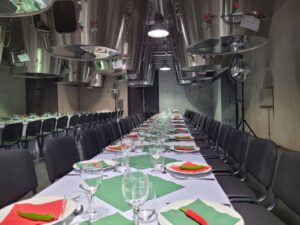
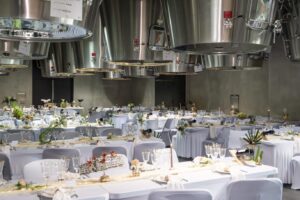
At Château La Fleur de Boüard, at Néac in the Lalande-de-Pomerol appellation a few minutes from Saint-Émilion, the Emile Peynaud vat room is around 230 m² (about 2,475 sq ft) and seats in the order of 130 people, taking up to 180 for a drinks reception when the outdoor spaces are used. It is the space for large families and milestone birthdays, the one where a group photograph still fits in the frame.
The barrel cellar, smaller, holds about a hundred and suits a table of thirty to sixty far better. It has one decisive advantage for a family meal: barrels absorb sound where stainless steel throws it back. You can hear each other from one end of the table to the other.
Exact capacities are confirmed at booking, according to the layout chosen.
What about the children?
This is the question that decides what the family remembers of the day. A bored child takes their parents home two hours early.
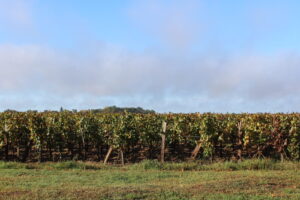
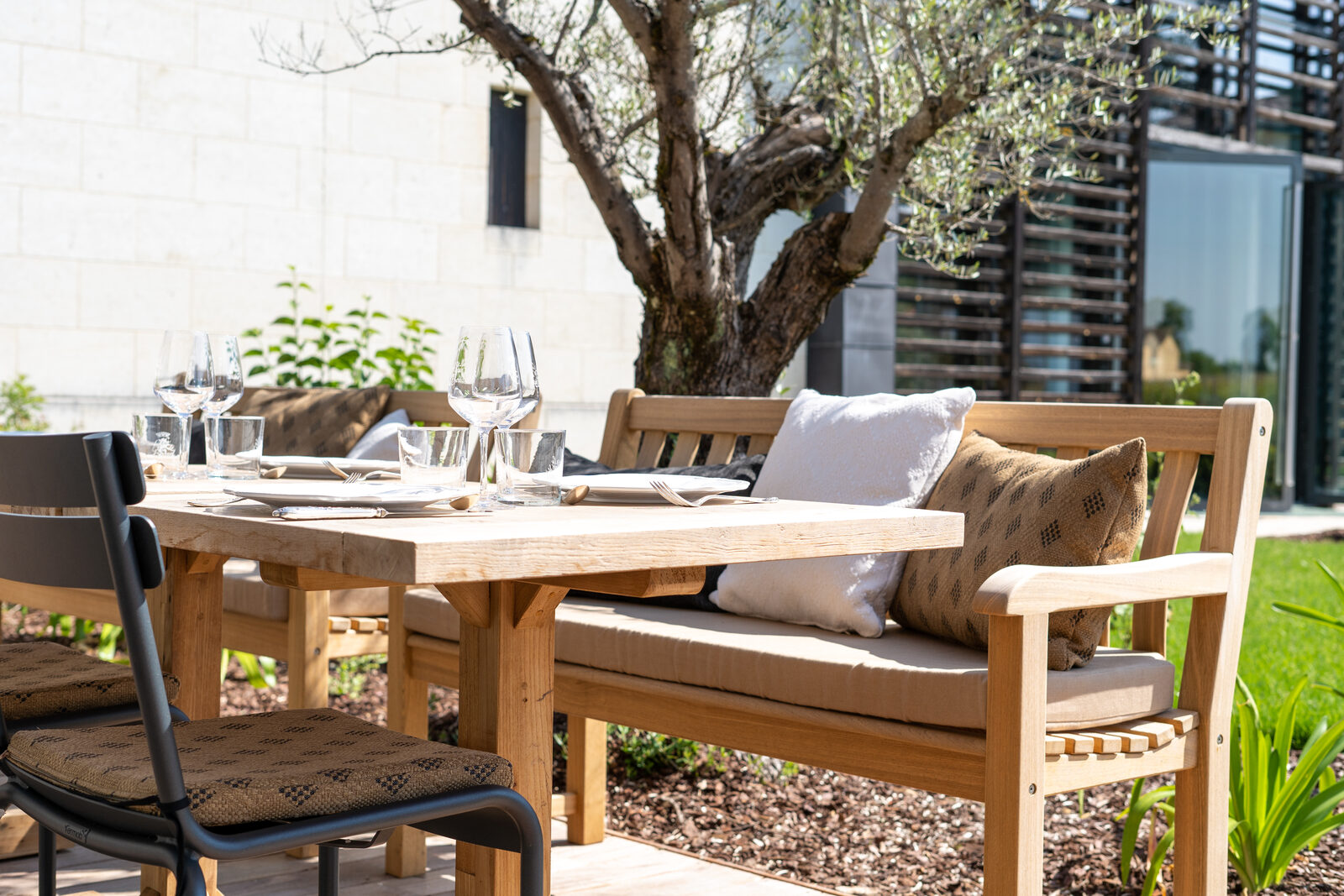
A wine estate has one asset no function room has: outdoor space. A garden, paths, vines to look at closely. It is a natural playground, provided the adults agree to keep an eye out.
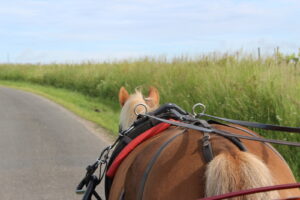
On the visits side, the estate offers family-friendly formats, and the child rate for the Chai des Lumières applies up to and including age 17. A carriage ride or a short tour fills exactly the stretch of the afternoon when a seated meal starts to feel long.
What you do need to plan: somewhere to park the little ones, and a mealtime that does not start at two in the afternoon.
Should everyone sleep on site?
No, and it is rarely possible — but the decision is worth making early. The estate says it can sleep up to 29 people across its three houses.
That is ample for close family, relatives travelling from far away and anyone who would rather not drive home after the meal. It is not enough for a hundred and thirty guests, and it is not meant to be.
The method that works is to decide very early who stays on site — usually grandparents, parents of very young children and those coming from abroad — and let everyone else book nearby. The estate’s accommodation page helps settle that list.
A family gathering where some guests stay the night changes character: the next morning becomes a second act, often the better one.
What happens between lunch and leaving?
Plan a sequence, or it fills itself badly. This is the classic gap: half past three, the coffee is drunk, nobody knows what to do.
Three options work at a wine estate. A short cellar tour, which gets everyone back on their feet and supplies a subject of conversation. Free time in the grounds, which lets the groups re-form. Or a tasting for those who want one, while the others stay at the table.
What matters is that something is offered, not that everyone joins in. A family tires less from a programme than from aimlessness.
Does a christening work like a birthday?
Almost, with one constraint: the timing is not yours. A church christening depends on the parish calendar, and the meal is arranged around it.
That has a practical consequence: you do not freely choose your slot, so you need to check the venue’s availability and the church’s before committing to anything. A wine estate generally has grounds that lend themselves to a reception after the ceremony, and the garden here also hosts secular ceremonies.
Everything else — the table, the caterer, the children, the accommodation — is handled exactly as for a birthday. The estate’s christening page sets out the spaces involved.
Who handles the food?
A caterer — and the estate imposes no exclusive one on its reception packages. That freedom matters when a family has its habits, or a fixed budget.
Two points to build in from the start. First, an allowance of estate wines is included in the reception packages — in the order of one bottle per three guests: a budget line, not a surprise. Second, a family meal almost always involves particular diets, and it is better to tell the caterer a fortnight ahead than at the moment of service.
For a smaller format, the private table at Les Chais de la Fleur answers a different need: one single table, without privatising a large space.
When should you book?
Later than a wedding, earlier than you would think. The estate reports widely varying lead times for events that are not weddings — from a few weeks to a few months.
The real constraint is not the venue, it is the date. A Sunday in May or a Saturday in September competes with weddings; a Friday in November competes with nobody. If your date is fixed — a milestone birthday, a christening set by the parish — treat yourself as a wedding and allow plenty of time.
Our piece on the twelve-month countdown for a wedding at a wine estate sets out that logic of what exists only once.
What to ask before you commit
The questions with a number for an answer, again. Five will do.
- Exactly how many seated covers, in the layout you have in mind?
- How late is music allowed, and in which space? Here, dancing runs until four in the morning in the vat room, but the cut-off varies by room.
- How many parking spaces, and can a coach turn?
- What is the fallback if the outdoor part becomes impossible?
- Who clears up, and by when must the site be vacated?
A visit spent talking only about atmosphere leaves all five open — and those are the answers that make the difference on the day.
In short
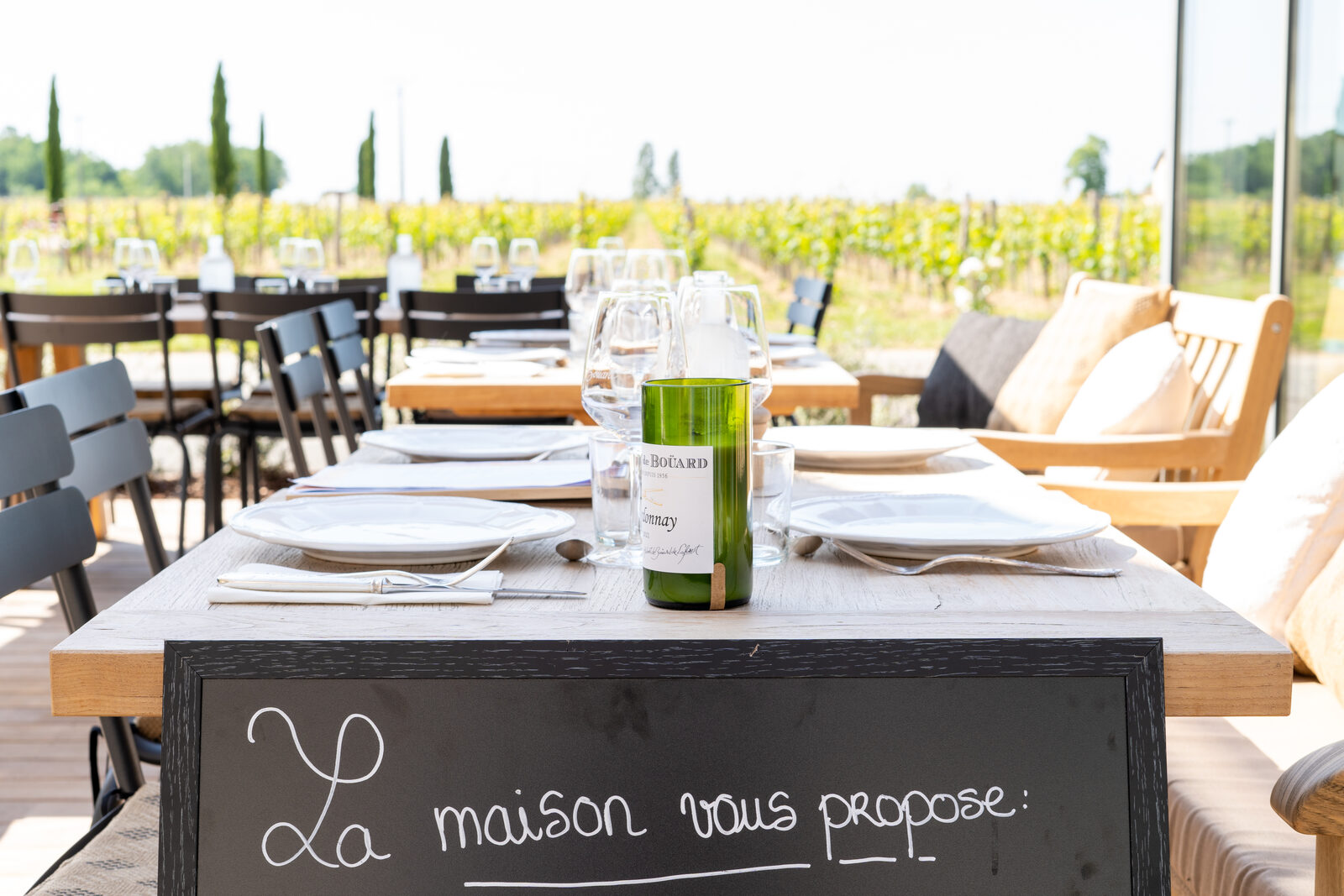
A family gathering needs a room of the right size, some outdoor space for the children, a few beds for those travelling far, and a planned sequence after the coffee. It is not a budget wedding: it is a format with rules of its own.
A wine estate answers it well, because it offers several spaces and room outdoors. The trick is to choose the room by the number of guests, not by the photograph.
Frequently asked questions
How many people can the estate host for a family meal?
The Emile Peynaud vat room seats in the order of 130 and takes up to 180 for a drinks reception using the outdoor spaces; the barrel cellar around 100. Exact capacities are confirmed at booking.
How many guests can sleep on site?
The estate says it can sleep up to 29 people across its three houses. Others stay in accommodation nearby.
Can you come with children?
Yes. The grounds and outdoor spaces suit them, and the child rate for the Chai des Lumières applies up to and including age 17.
Is a caterer imposed?
The estate imposes no exclusive caterer on its reception packages. An allowance of estate wines is still included.
Can a christening reception be held at the estate?
Yes. The church ceremony takes place at the church and the estate hosts the reception that follows. The garden also lends itself to a secular ceremony.
How far ahead should you book?
Lead times vary widely for events other than weddings, from a few weeks to a few months. If your date is fixed or falls in high season, allow plenty of time.