What is the Alchemy Workshop?
Two hours, a guided tasting, then your own blend, in the middle of the cellar. The estate quotes €300 including tax for up to five participants, then €50 for each additional participant.
A word on where you are. Néac lies in the Lalande-de-Pomerol appellation, on Bordeaux’s Right Bank, minutes from Saint-Émilion and bordering Pomerol.
The session runs in three parts. A tour of the estate first, to see where the grapes come from. A tasting next, which supplies the shared vocabulary. Then the blending itself, where each person builds their own version from the same components.
You leave with your creation: the estate says each participant takes home a half-bottle of their blend.
What do you taste before blending?
Five estate wines, and the selection is not decorative: it sets up the reference points you will need five minutes later.
- The Grand Vin, La Fleur de Boüard — the benchmark everything is compared against.
- Le Plus, the single-plot cuvée — the estate’s extreme, concentrated and built to age.
- Le Lion, the second wine — the same house in a more approachable register.
- The Chardonnay and the Sauvignon, a reminder that one estate is not only red.
Tasting these side by side teaches more in twenty minutes than an hour of explanation: you feel at once what a shift in proportion moves. The full range is set out on our estate wines page.
How does the blending work?
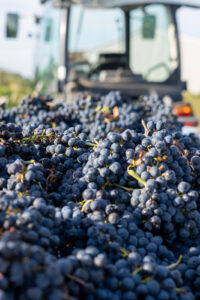
With a measuring cylinder, a pipette and a lot of failed attempts — that is the point. The estate’s grape varieties are laid out separately: Merlot, Cabernet Franc, sometimes Malbec.
Almost everyone starts with Merlot, which brings flesh and volume. Then you add a few per cent of Cabernet Franc and taste again. That is where most participants understand something: two per cent is enough to change the finish. What looked like a detail turned out to be a pivot.
The rest is a conversation with yourself. More roundness or more freshness? A fruitier nose or a longer finish? Every answer closes one door and opens another.
Do you need to know about wine?
No, and it is arguably more interesting if you don’t. The workshop asks for no prior vocabulary: the components are put in front of you and you decide what you prefer.
A beginner arrives without received ideas, tastes what they taste and commits. A seasoned enthusiast arrives with theories — and often spends the second hour discovering that their palate does not ratify what their head believed.
The only thing that genuinely helps is accepting that you will get it wrong two or three times before you get it right.
What do you actually learn?
That blending is a matter of tiny proportions and deliberate sacrifices. Three things stay with you long after the session.
First, that a wine is not the sum of its parts: two balanced components can produce a lopsided whole, and the reverse happens too.
Second, that you cannot have everything. Gaining roundness usually costs tension. Lengthening the finish can harden the mid-palate. A winemaker arbitrates the same trade-offs, on another scale.
Third, that a label reading “80% Merlot, 20% Cabernet Franc” stops being an administrative line. You now know what those twenty per cent do.
How is it different from a tasting?
A tasting teaches you to describe; a blending workshop teaches you to decide. Those are not the same muscles.
In a guided tasting you are handed a finished wine and the words to discuss it. In a blending workshop you are handed components and the responsibility for the result. Getting it wrong is possible, and that is exactly what makes the lesson stick.
If you would rather test your palate without a safety net, our piece on blind tasting describes a different exercise — more intimidating, just as instructive.
Who does it suit?
Anyone who would rather do than watch. Four profiles get the most from it.
- Curious visitors with no technical background, for whom this is the most concrete way into wine.
- Returning guests who already know the cellar and want something other than a second tour.
- Small groups of friends and adult families, given the flat fee for up to five.
- Corporate teams on an offsite, since the exercise works as a collective decision-making workshop — a group has to commit to one answer.
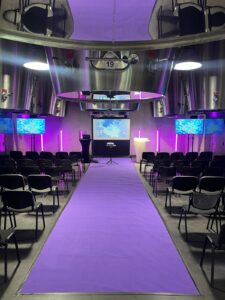
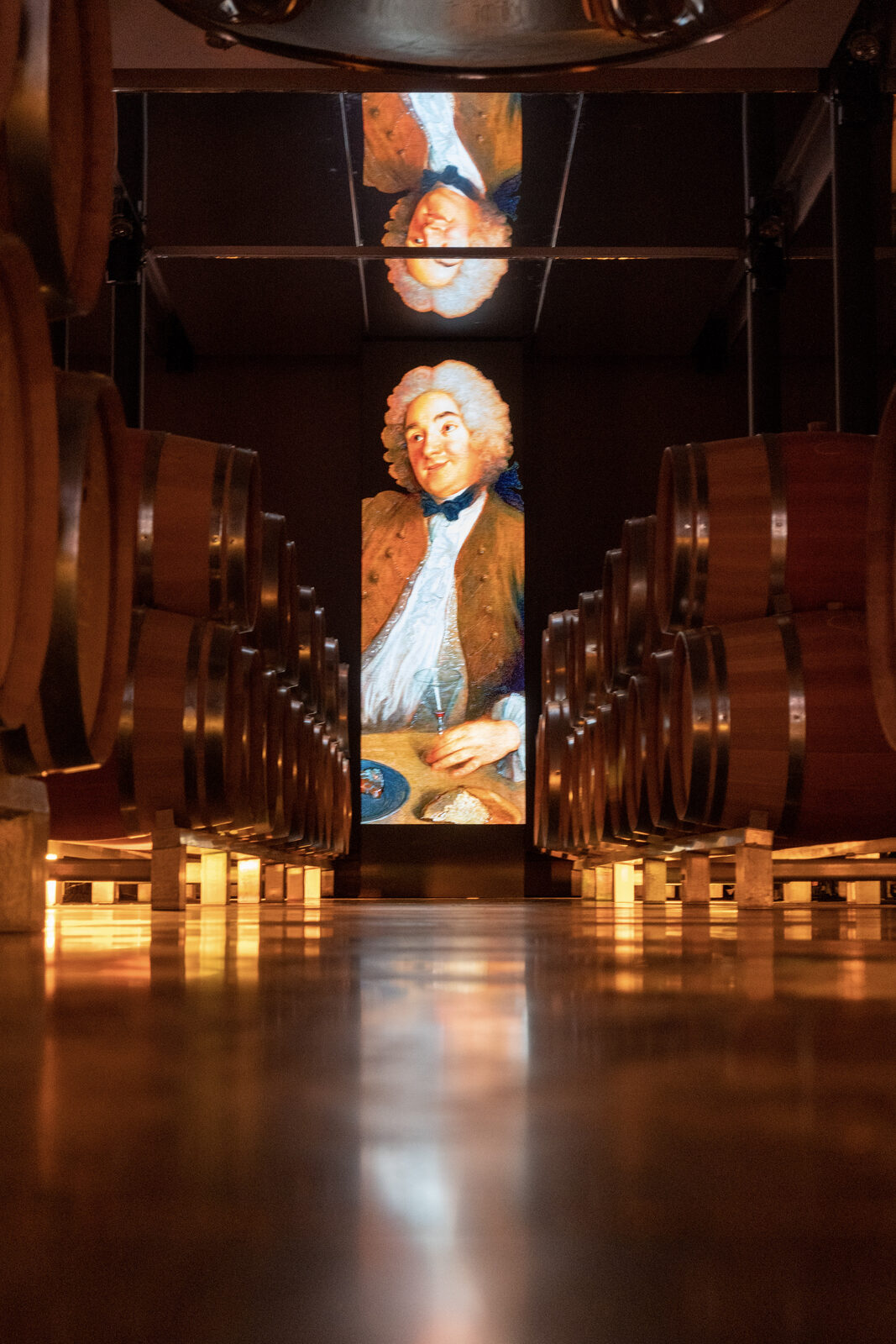
It suits less well those who mainly want to see the estate: a tour of the Chai des Lumières, the estate’s immersive cellar experience, answers that better.
What do you do with your bottle?
Keep it, drink it, and above all taste it again later. That is the most interesting extension of the workshop, and almost nobody thinks of it on the day.
A blend composed in two hours evolves like any other wine. Opening it six months on lets you check whether your arbitration held — whether the Cabernet Franc you found a little dry has knitted in, or whether the roundness you loved has slackened.
It is also a bottle with a story to tell at the table, which no shop purchase can offer.
How do you book, and when should you come?
By reservation, all year round, avoiding low-season weekends. The estate is open year-round, closing between Christmas and New Year; in low season, weekends are not normally covered.
The workshop takes place indoors, so weather is not a factor, unlike the formats that go out into the vineyard. Allow two hours on site, plus more if you are combining it with lunch or another visit.
Rates and participant numbers are confirmed at booking.
In short
Two hours, five wines tasted, the estate’s grape varieties at your disposal and a half-bottle to take away. The Alchemy Workshop does not teach you to talk about wine: it teaches you what a winemaker decides, by putting you in that seat for an hour.
And you leave with a useful conviction: the big differences are settled by very small proportions.
Frequently asked questions
How long does the Alchemy Workshop last?
Two hours, including the tour and the tasting.
How much does it cost?
The estate quotes €300 including tax for up to five participants, then €50 for each additional participant. Rates are confirmed at booking.
How many wines do you taste?
Five estate wines: the Grand Vin, Le Plus, Le Lion, the Chardonnay and the Sauvignon.
Do you take your blend home?
Yes. The estate says each participant leaves with a half-bottle of their creation.
Do you need tasting experience?
No. The workshop is designed to work without prior vocabulary, and beginners often do very well.
Does it work for a corporate group?
Yes. The format suits offsites well, since it forces a group to reach one decision together.