What exactly is Wine and Clog?
A carriage ride through the estate’s parcels, punctuated by tastings. It runs 2 hours 30 minutes and costs €580 including tax for up to four participants. Three estate wines are tasted.
The setting: Château La Fleur de Boüard at Néac, in the Lalande-de-Pomerol appellation on Bordeaux’s Right Bank, minutes from Saint-Émilion and Pomerol.
One practical point to know before booking: the total weight of the group is capped at 300 kg (around 660 lb). That is the limit of the harness, not a nicety — it determines who can come, and is better settled at booking than on the day.
The estate presents the experience as suited to couples, families and small groups of friends.
Why does a carriage change how you see a vineyard?
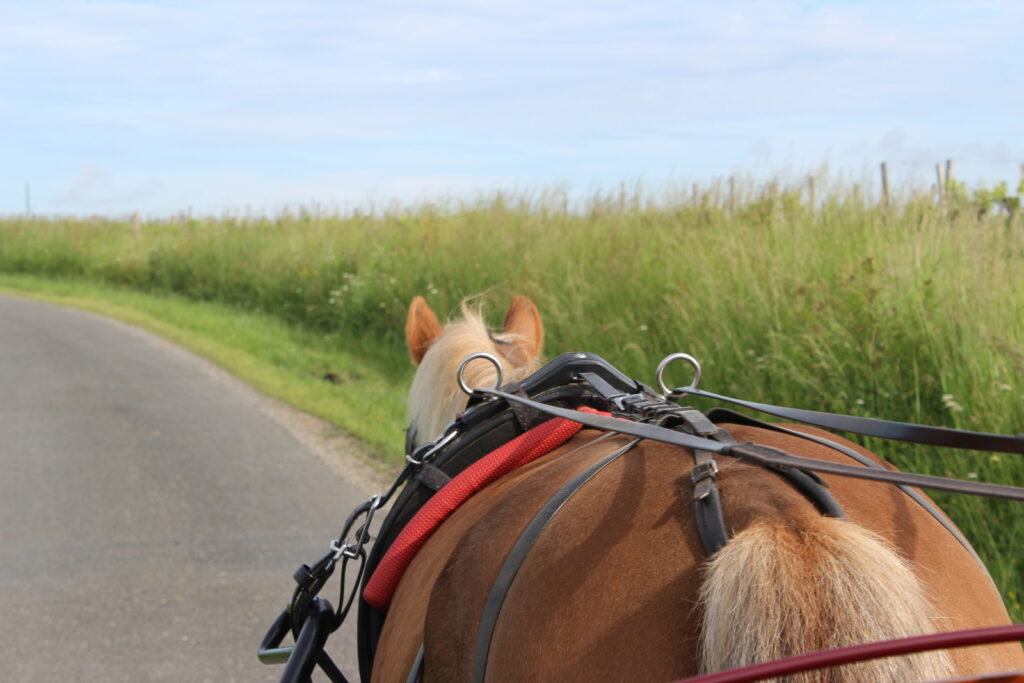
Because it sets the right pace. A car crosses a vineyard fast enough to flatten the land: everything looks uniform, and you hear nothing. On foot you cover too little ground to notice how the soil changes.
A carriage sits exactly between the two. Slow enough to register the variations — a stonier parcel, a damper hollow, a better-exposed row — and quick enough to cross several terroirs in one outing.
At Néac this matters. It is the hilly half of the Lalande-de-Pomerol appellation, and the relief is precisely what a car erases. Our terroirs read far better at this speed.
What do you see along the way?
What no tasting room can show: the wine before it is wine.
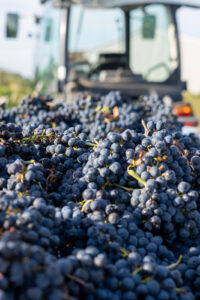
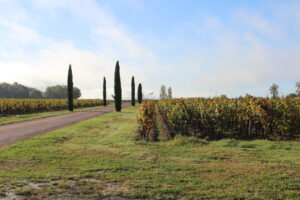
Depending on the season the rows are bare and pruned, covered in young growth, heavy with fruit, or reddening after harvest. The soil changes visibly from one parcel to the next — pale gravel here, darker clay a few metres on.
You also glimpse the boundary with Pomerol, a few hundred metres to the south, marked by nothing more than a stream called the Barbanne. It is the kind of detail people remember because they saw it, not because they read it.
And the horses?
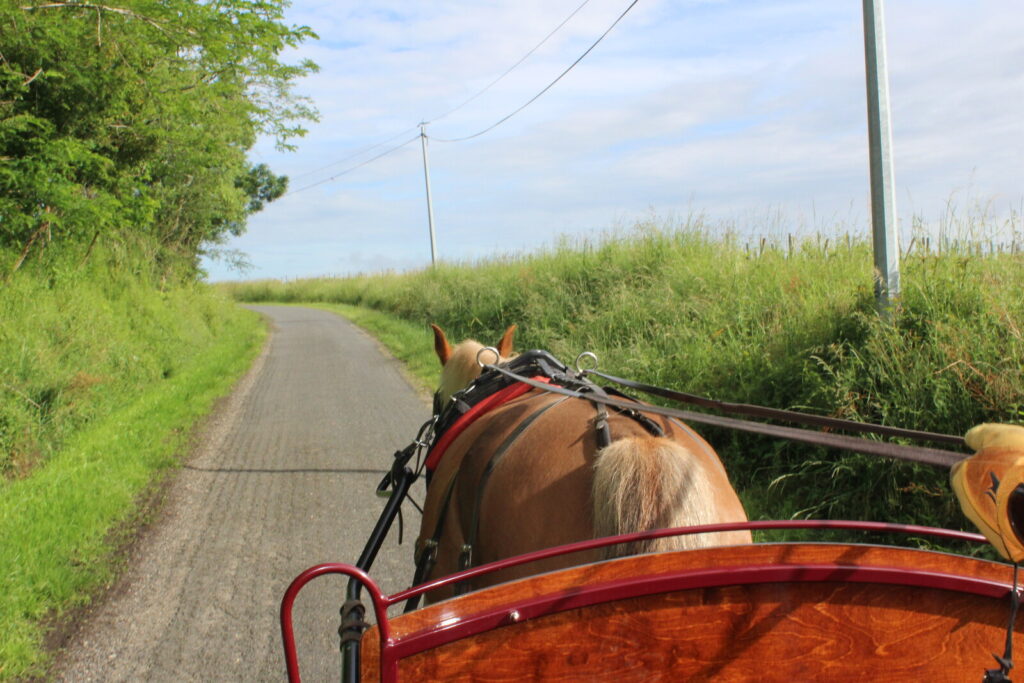
They are not scenery. A harness sets its own tempo: you leave when they are ready, you stop where stopping is possible, and the dominant sound becomes hooves rather than an engine.
It is also what makes this memorable for children and for guests with no particular interest in wine. A cellar tour can feel long to them; a carriage ride never does.
How do the tastings work?
Three estate wines, served during the outing rather than all at once on arrival. Tasting in the middle of the parcels changes the perception: it becomes much easier to connect what is in the glass with what is in front of you.
That is the main argument for this format over a seated tasting. A wine from gravel and a wine from clay mean something different when you have just crossed both soils. The full range is set out on our estate wines page.
Who does it suit best?
Four kinds of visitor, fairly clearly.
- Couples after a memorable outing rather than a technical tasting.
- Families, since the format holds children where a cellar tour loses them.
- Small groups of friends, given the flat fee for up to four.
- Returning visitors who already know the cellar and want something else.
It suits less well those who have come specifically to deepen their tasting: the Masterclass Workshop or the Blind Tasting answer that better.
Which season is best?
Each season shows something different, and none shows everything.
In spring the rows fill with young growth and the vineyard is vivid green; it is the most pleasant time in an open carriage, neither cold nor overwhelming. In summer the bunches have formed and the landscape is at its most photogenic, though early morning or late afternoon beats the middle of the day.
In September the estate’s work becomes visible: teams are preparing for harvest, and you meet the working vineyard rather than just the scenery. In autumn and winter the leaves fall and the soil appears — paradoxically the best moment to understand the terroirs, since nothing hides them any more. The outing simply asks for warmer clothes.
There is no bad time of year, then, only different outings. The only real criterion is the weather on the day.
What should you bring?
Little, but it matters.
Clothes for the outdoors: the carriage is open, and two and a half hours in the air is not two and a half hours in a cellar. Shoes that can meet soil for the stops. And the group’s total weight, worth checking before booking, since it decides whether four of you can go.
Finally, the weather. A carriage outing depends on it — confirm conditions with the estate the day before rather than discovering them on the morning.
In short
Two and a half hours, a horse-drawn carriage, three wines, up to four participants for €580 including tax, and a group capped at 300 kg. It is the estate’s slowest experience, and that is exactly why it shows the most.
If you are weighing it against the other formats, the rule of thumb is simple. Come for the wine and a seated tasting or a masterclass will serve you better. Come for the place — the soils, the slope, the boundary with Pomerol, the sound of a vineyard with no engine in it — and nothing else on the list comes close. The full range of experiences is set out on our wine tourism pages.
Your questions answered
How long does Wine and Clog last?
Two and a half hours, tastings included.
How many people can take part?
The €580 fee including tax covers up to four participants, with a total group weight limit of 300 kg for the harness.
How many wines are tasted?
Three estate wines, served during the outing.
Is it suitable for children?
The estate presents it as suited to family outings. The weight limit still needs factoring into the group.
What happens in bad weather?
The carriage is an open vehicle, so it is worth confirming conditions with the estate close to the date.
Do you need to know about wine?
No. It is the estate’s most approachable format for anyone with no tasting experience at all.