What exactly is a blind tasting?
Tasting without knowing. Everything you normally look at first is taken away — the château name, the appellation, the vintage, the shape of the bottle — and you are left with your senses.
At the estate the workshop runs 1 hour 15 minutes and covers four wines served from carafes. It costs €124 including tax for two people, then €55 per additional participant.
The point is not to catch you out. It is to make you describe what you perceive, instead of reading what you are supposed to perceive.
Why does the label distort judgement?
Because it decides before you do. Seeing a prestigious appellation or a celebrated vintage steers perception: you look for the depth you expect, you forgive a hardness, you find remarkable what you know to be expensive.
This is not bad faith, it is how perception works. Context bears on sensation. Blind, that context disappears — and a modest wine is regularly preferred to an illustrious one, which is precisely the interest of the exercise.
It is also what makes blind tasting useful well beyond the game: it teaches you to trust your own palate.
How does a session unfold?
In the order of the senses. The method is always the same, and one session is enough to learn it.
The eye
You look at the colour and its intensity. A young wine is purple, almost violet at the rim; it turns ruby, then garnet with age. An orange rim marks a wine already well along. Density of colour also hints at grape variety and concentration.
The nose
In two stages. First the still glass, which gives up the most volatile aromas. Then after swirling, which opens the heavier ones. You look for families before names: red or black fruit, fresh or cooked, spice, oak, notes of age.
The palate
You check what the nose promised, and add what it could not tell you: acidity, the texture of the tannins, power, and above all length — how long the wine goes on existing after you swallow.
The conclusion
Only then do you venture a grape, a region, an age. Being wrong does not matter; what counts is the reasoning that led to the guess.
How are the four wines chosen?
By contrast, never by resemblance. A flight where every wine resembles the next teaches nothing. The aim is to produce gaps wide enough for the palate to catch without effort.
Three axes shape most flights. Age first: a young wine and a mature one from the same estate show, in two glasses, everything time does to wine. Grape variety or blend next — a merlot-dominated wine and one marked by cabernet franc do not share a texture. Origin last: two different terroirs, sometimes only a few hundred metres apart here on the Right Bank.
The order of service matters as much as the selection. You move from lighter to fuller, younger to older, or the second wine becomes unreadable after the first. A very concentrated wine poured at the start flattens everything that follows.
This is where an estate with a broad range has an advantage: it can set its own wines against each other, from the second wine to the Le Plus parcel selection, and let the hierarchy be felt without ever being named.
Do you need to know about wine?
No, and this is the most democratic format there is. A seasoned taster arrives with references that help, and with certainties that get in the way. A beginner describes what they smell without a filter — and is not wrong more often.
The estate presents the workshop as a convivial moment, meant for enjoying a passion rather than examining the participants. Most people come as a group.
How does it differ from a guided tasting?
The order of knowledge is reversed. In a guided tasting the wine is explained and then you taste it: knowledge comes before sensation. Blind, you taste first and the explanation follows, to make sense of what you have just experienced.
The two complement each other. To place the wines afterwards, our estate wines page lets you calmly revisit what you tasted blind.
Where does the workshop take place?
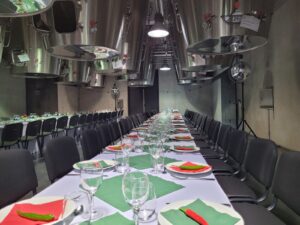
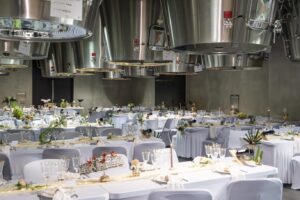
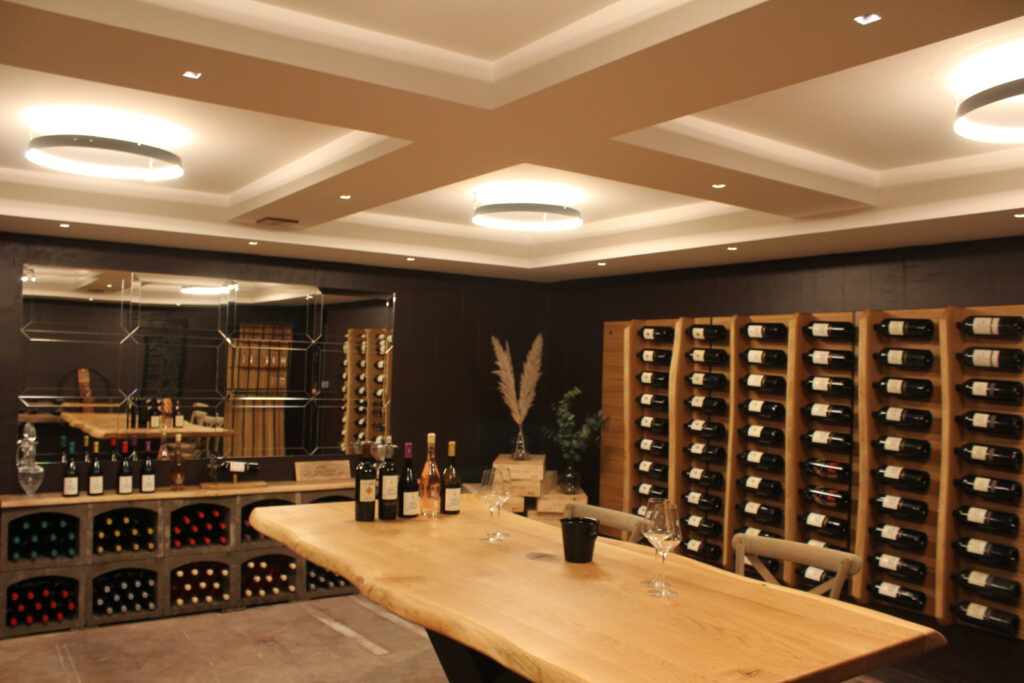
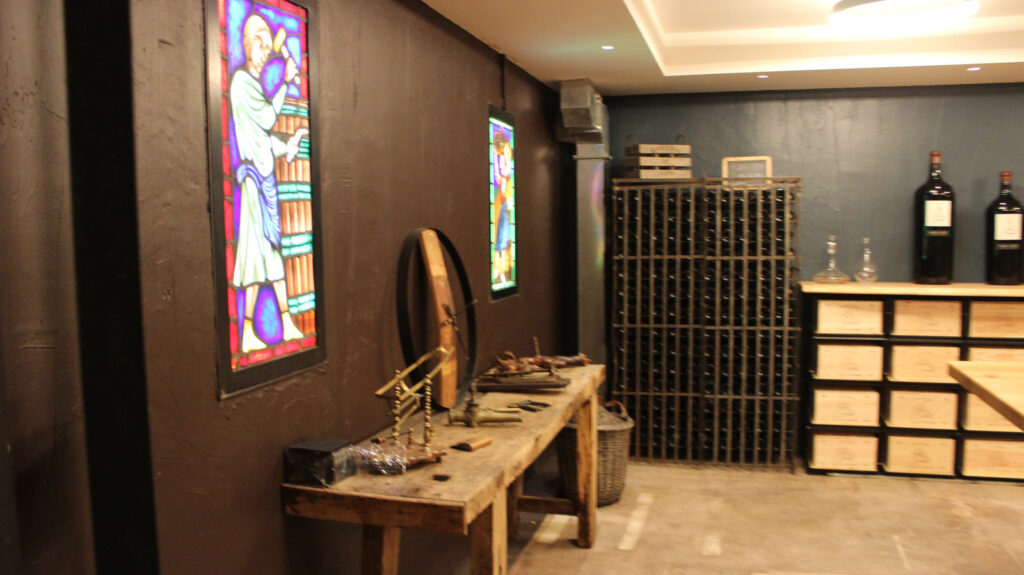
At the estate in Néac, within the cellar itself. That is not a trivial detail: tasting a few metres from the vats where the wine was made changes the frame of mind, and makes it natural to continue into the Cellar of Lights if you want to understand where the wines you have just tasted blind came from.
Many visitors combine the two: the tour first for context, the blind tasting after for the exercise. The reverse also works, and is arguably more honest — you taste knowing nothing, then find out.
What do you take home?
Three things, usually.
That you perceive far more than you thought: it is the vocabulary that is missing, not the sensation. That a wine is judged on length and balance rather than immediate power. And that you can now taste this way at home — a sock over a bottle is enough to recreate the exercise at your own table.
In short
Four wines in carafes, seventy-five minutes, no labels. Look, smell, taste, conclude — in that order. No prior knowledge required, and being wrong is part of the method.
Your questions answered
How many wines do you taste?
Four, served from carafes, with no label or visual clue.
How long does the workshop last?
One hour and fifteen minutes.
What does it cost?
€124 including tax for two people, then €55 per additional participant. The rates published by the estate apply at the time of booking.
Do you need to come as a group?
It is priced from two people and suits a group well: comparing impressions is part of the exercise.
What if I cannot identify anything?
That is the norm at first, and it does not matter. The aim is not to name the wine but to learn to describe what you perceive. Most people are surprised by how much they get right on texture and age, and how little on region — which is exactly the right way round for a beginner.
Can you do this at home afterwards?
Easily, and it is the best way to keep the habit. Cover the bottles, have someone else pour, and taste in the same order: eye, nose, palate, conclusion. Two contrasting wines are enough to make the exercise worthwhile.
Is the workshop suitable for a birthday or a small celebration?
It works particularly well for one. The competitive edge is gentle, everybody takes part, and nobody needs prior knowledge — which is rarely true of wine activities.