Where exactly is this?
The Libournais is the part of Bordeaux’s Right Bank around the town of Libourne, about forty kilometres (25 miles) east of the city of Bordeaux. It takes in Saint-Émilion, Pomerol, Lalande-de-Pomerol and Fronsac.
Libourne has its own TGV station, served directly from Paris, which makes it one of the simplest ways into the Bordeaux vineyard without a car.
Why leave Saint-Émilion?
Because visitor density there is inversely proportional to the space available. The village is magnificent and it knows it: in summer you need to arrive before nine to enjoy it.
The rest of the Libournais offers three things Saint-Émilion does not. Space — you can park, you can walk without queueing. Ordinary life — a market, quaysides, a town that exists outside tourism. And a clearer reading of the vineyard, because the plots are not lined with shops.
This is not advice to avoid the place: it is a question of balance. A day in the Libournais works better with Saint-Émilion in the middle of it rather than at the centre.
What is there to see in Libourne?
A thirteenth-century bastide town set at the confluence of two rivers. Libourne is a town, not a stage set, and that is exactly what makes it restful after Saint-Émilion.
Place Abel-Surchamp, at the heart of the bastide, is lined with arcades and hosts the market. The Porte du Grand Port, a remnant of the fourteenth-century fortifications, marks the way down to the water. And the Dordogne quays lead to the confluence with the Isle — an open view over two rivers, short on shade in high summer but perfect in the shoulder seasons.
For indoor heritage, the Musée des Beaux-Arts occupies the second floor of the town hall, a fifteenth-century building. The collection runs from the fourteenth to the twentieth century and includes a holding devoted to René Princeteau. Entry is free.
Which day should you come?
A market day, and Tuesday or Friday rather than Sunday. The Place Abel-Surchamp market runs on Tuesday, Friday and Sunday mornings.
Sunday is the fullest and liveliest — and the busiest, with the parking that implies. Tuesday and Friday give you the same market in a workable version.
It is the moment the town is most itself, and much the best way to start a day in the Libournais: shopping first, vineyard afterwards.
What separates Pomerol, Lalande-de-Pomerol and Néac?
A stream, and a gap in reputation out of all proportion to the gap in the ground. It is the most interesting geographical fact in the area.
The Barbanne, a modest watercourse, separates Pomerol from Lalande-de-Pomerol. North of that line, the Lalande-de-Pomerol appellation covers around 1,100 hectares (2,700 acres) across two communes: Lalande-de-Pomerol and Néac.
At Néac, the Chevrol plateau continues the Pomerol plateau, at the same altitude, on soils mixing clay and fine gravel. In other words, the administrative boundary does not follow the geological one — which is what makes the sector interesting for anyone hunting value.
Our terroirs lie on that side of the Barbanne.
What is there to see that is not wine?
More than you would expect, if you look at the map rather than the guidebooks. Four outings leave the wine register entirely.
Château de Vayres, a quarter of an hour from Libourne, has French formal gardens, a mannerist façade and a monumental staircase. Mind the season: it closes from November to March.
The port of Saint-Pardon, in the commune of Vayres, is one of the viewing points for the mascaret — the tidal bore that runs up the Dordogne against the current. It is best seen between August and October.
The palus de Condat, less than three kilometres from the centre of Libourne, is a protected wetland known for its birdlife.
And the Moulin de Porchères, some thirty kilometres away, is a nineteenth-century industrial mill still in working order, visited by appointment.
How do you get around?
Libourne station is the way in; a car helps after that. From the station, the town centre and the quays are walkable.
To reach the estates of Néac, Pomerol or Lalande-de-Pomerol you need a car, a bicycle or a shuttle.
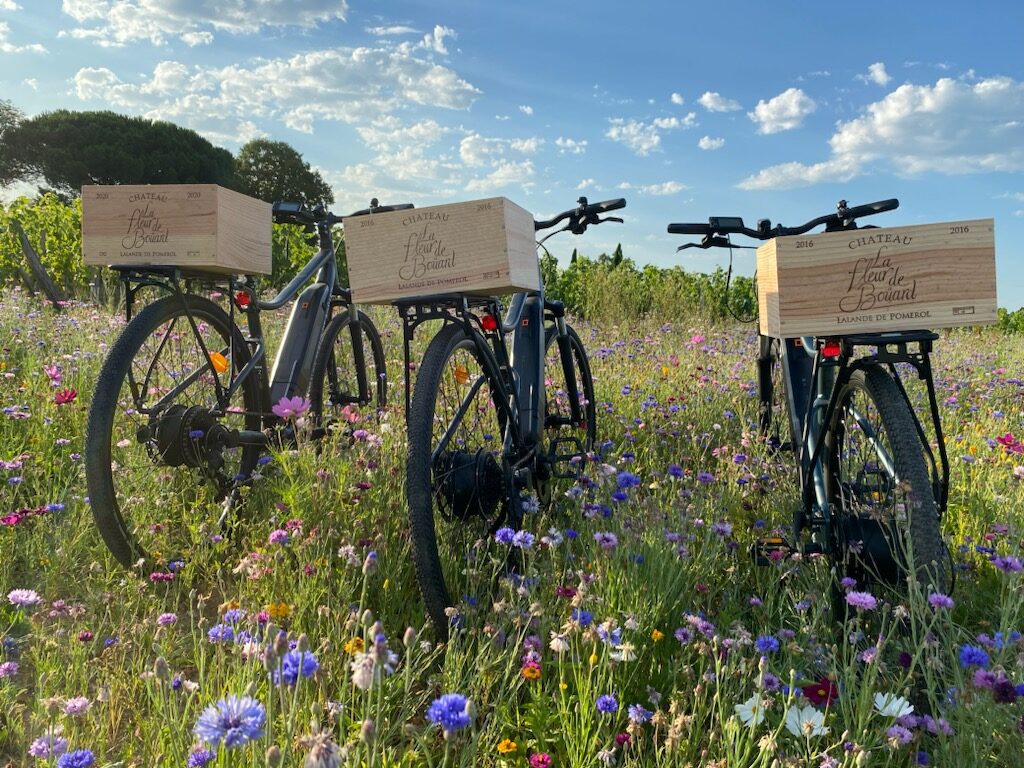
The bicycle deserves a particular mention: the land is gently rolling, the distances are short, and a loop between Libourne, Pomerol and Néac fits comfortably into half a day. Our piece on reaching Néac without a car sets out the options.
When should you come?
Autumn and winter are the most underrated seasons here. In summer the Libournais shares both Saint-Émilion’s crowds and the heat of the plain.
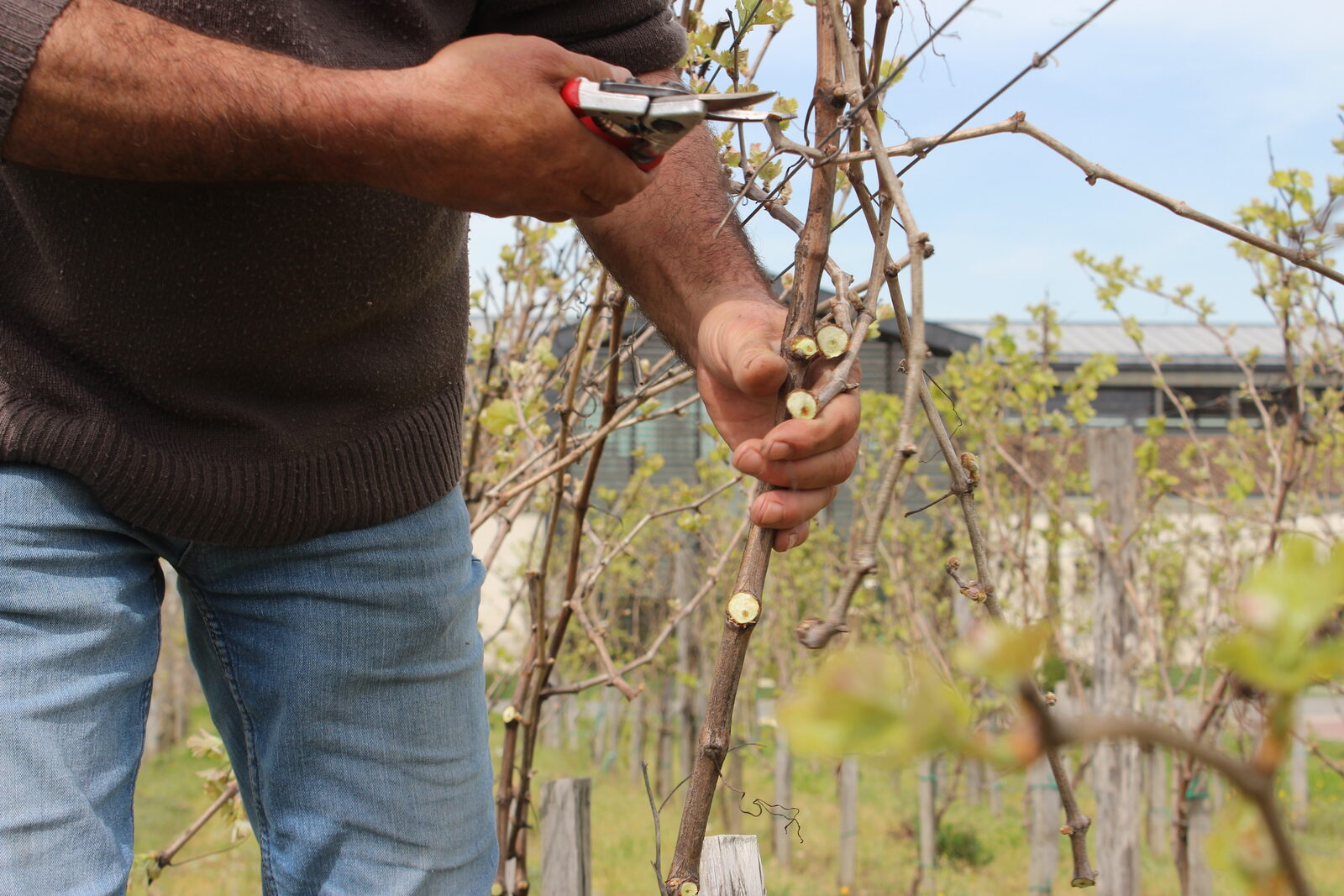
From September to November the light is low, the vineyard is working, and the colours change weekly. From December to March the leaves are down and the soil appears: paradoxically the best season for understanding a terroir, since nothing hides it any more.
Two constraints to build in: several heritage sites close in winter, and estates often reduce weekend openings in low season. A phone call before setting out saves a closed door.
What does a good day look like?
Market in the morning, vineyard in the afternoon, Saint-Émilion at the end of the day. That order creates the least friction.
Start in Libourne around nine, on a market day. Have lunch there or at an estate. Give the afternoon to a cellar visit at Néac or Pomerol, where the plots can be read and there is still somewhere to park.
Then finish in Saint-Émilion in the late afternoon, once the coaches have left and the light moves across the limestone. The village gains back exactly what the crowd takes from it for the rest of the day.
What do you actually gain?
A truer idea of what this region is. Saint-Émilion tells the story of a listed medieval village; the Libournais tells the story of a country that has lived from wine for centuries, with its ports, its markets and its invisible borders.
More prosaically, it is also a region where wines built to age are still reachable without paying for the name. The difference in reputation between the two banks of a small stream says a great deal about what a label is worth.
In short
Libourne for the bastide, the market and the quays. Néac and Pomerol for the vineyard and for a border that corresponds to nothing on the ground. Vayres, Saint-Pardon and Condat to step outside wine altogether.
And Saint-Émilion at the end of the day, when it becomes liveable again.
Frequently asked questions
When is Libourne's market?
Tuesday, Friday and Sunday mornings, on Place Abel-Surchamp. Sunday is the liveliest and the busiest.
What separates Pomerol from Lalande-de-Pomerol?
A small watercourse, the Barbanne. Lalande-de-Pomerol covers around 1,100 hectares north of that line, across the communes of Lalande-de-Pomerol and Néac.
What can you visit in Libourne in bad weather?
The Musée des Beaux-Arts, on the second floor of the town hall. Entry is free and the collection runs from the fourteenth to the twentieth century.
Can you see the tidal bore in the Libournais?
Yes, notably from the port of Saint-Pardon in the commune of Vayres. It is best observed between August and October.
Is Château de Vayres open all year?
No. It closes from November to March.
How do you reach the Libournais without a car?
Libourne station is served directly by TGV from Paris. The centre is walkable, and the surrounding estates are reachable by bicycle or shuttle.