Before: goals, scope and baseline
Start by reducing your ambitions to the essentials. Choose a maximum of two or three objectives, each linked to an indicator that everyone can understand: number of decisions made with an owner and a deadline, percentage of actions launched within 30 days, internal NPS after the event, or perceived quality of inter-team connections. It is better to have a small set of robust and actionable KPIs than a lavish dashboard that does not lead to anything concrete.
Clearly define the scope (participants, leadership, partners), expectations (strategic alignment, cohesion, acceleration of a project) and measurement horizon (D+2 for perception, D+30 for execution). A quick initial survey—five questions, two minutes—gives you a “before” snapshot that you can use to honestly compare the “after”.
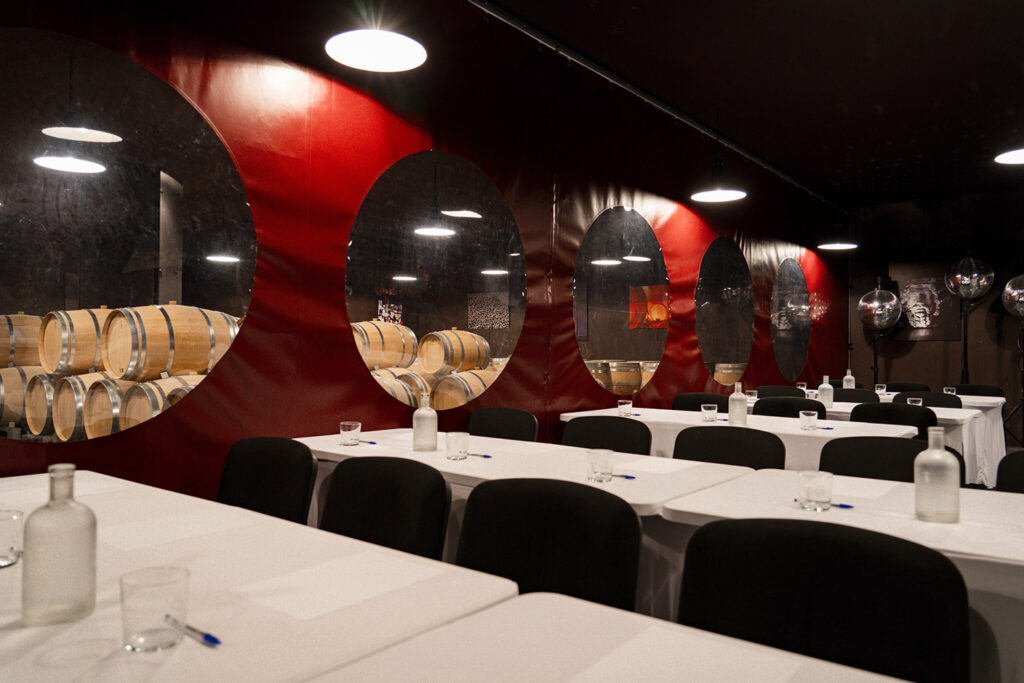
Also consider the logistical framework: plenary sessions, subcommittees, breaks, meal/break times. The goal is not to fill the time, but to orchestrate a breathing space that promotes decision-making.
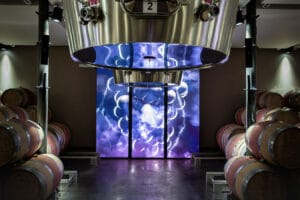
Finally, anticipate internal networking: where will you increase the value of the “experience”? A stop at the **Chai de Lumière** to connect ideas to the place, a **guided tasting** to create a common language, or a simple walk among the vines to let a debate settle. These breathing spaces are not “separate” from the off-site event; they reinforce the memory of it.
During: instrument without killing the vibe
Alternate deep work and breathing spaces. Equip teams with a shared decision log (decision, owner, deadline, status) and one‑minute pulses via QR codes. Keep forms short and useful; your goal is to collect a handful of reliable signals for the D+2/D+30 landing.
Give every breakout the same grid—problem, options, decision, risks, next step—so outputs are comparable. Layer in a short wine experience to refresh attention and connect content to place without derailing momentum.
- Useful pulses: ‘What did we decide this morning?’, ‘What remains unclear?’, ‘Who owns what by D+7?’
- Decision log visible at the end of the day with owners and deadlines.
- Attention pulse twice a day (AM/PM) to adjust pacing.
After: convert momentum into outcomes (D+2 / D+30)
Two checkpoints are enough. At D+2, share a one‑page memo with perceived usefulness, decision clarity and personal commitments. At D+30, review execution: % of actions launched, confirmed/adjusted decisions, blockers and resource needs. This cadence prevents momentum decay and builds trust.
Keep a **minimalist dashboard**: five lines updated in five minutes. What matters is cadence, not exhaustiveness. Anchor on observable facts; if a decision changes, record it explicitly and move on together.
Minimalist dashboard (30‑second read)
Participation: registered / attended / late / drop‑off reasons.
Engagement: workshops attended, contributions, questions.
Learning: pre/post delta, self‑assessment per team.
Cohesion: internal NPS, new cross‑team connections.
Business: decisions, D+30 tasks launched, leads/POCs opened.
We answere your questions
How many KPIs should we track?
Three families are plenty: engagement, learning, decisions. Keep them few and actionable.
Do we need special tools?
No. A shared spreadsheet, a couple of QR pulses and a visible decision log will do for most teams.
What about hybrid formats?
Run tech checks, add extra mics and track attendance by session; keep high‑interaction sequences onsite whenever possible.
How to secure manager buy‑in?
Assign 1–2 decisions per manager with a locked D+30 check‑in and publicly confirm ownership in the closing plenary.